Engineering Guide — How Terminals Connect Cables (And Why It Matters)
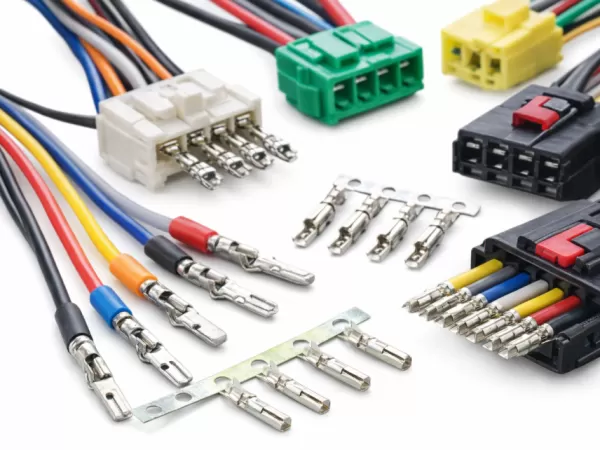
At Easychips, we often explain that a complete connector system is not just the plastic housing—it's the housing + terminal, working as one integrated interface.
So how exactly do terminals connect cables? Let's break it down.
1) What Is a Terminal in a Cable Connection?
A terminal is a metal contact (usually copper alloy) that attaches to a wire and then locks into a plastic shell/housing, forming a complete connector system.
2) The 3 Most Common Ways Terminals Connect to Cables
In wire harness design, there are three mainstream connection methods engineers will encounter:
A. Crimp Terminals (Most Common)
Crimping is the dominant method used in automotive, industrial, and consumer harnesses.
B. IDC (Insulation Displacement Contact) / Press-Fit
IDC terminals connect wires without stripping insulation. The metal forks “displace” insulation and make contact directly. Easychips classifies IDC press-fit connectors as a major connector structure option.
C. Screw / Spring-Loaded Terminals
These terminals clamp the conductor using a screw or spring force. Easychips also lists screw/spring-loaded terminals as a key category.
3) Key Technical Factors Engineers Should Check
Choosing a terminal is not just about “pin count.” Engineers should confirm these critical parameters:
Wire gauge compatibility (AWG / mm²)
A terminal must match the cable’s conductor range. Easychips terminals cover a wide range of AWG and mm² options across different pitches.
Contact material
Copper alloy / brass / phosphor bronze are commonly used—each affects spring performance and fatigue life.
Plating (Tin / Nickel / Silver, etc.)
Plating impacts corrosion resistance, insertion force, and long-term reliability.
Pitch / connector structure
Different applications require different connector pitches (1.0mm, 2.0mm, 2.54mm, 3.96mm, 5.08mm, etc.), and Easychips provides multiple package/spec options.
4) Terminal + Housing = A Complete Connector System
A common mistake is choosing only the housing first.
Easychips highlights that the plastic shell and terminal combine to form a complete connector system widely used in electronic and electrical applications.
5) How Easychips Supports Cable Connection Projects
At Easychips Precision Technology, we provide:
wire harness connectors (board-to-cable, wire-to-wire, and more)
plastic housings + corresponding terminals as a complete system
Final Thought
A good cable assembly doesn't fail because the wire breaks—it fails because the terminal connection was wrong: incorrect gauge, improper crimp height, weak retention, or unsuitable plating.
#WireHarness #Terminal #Connector #CableAssembly #Crimping #IDC #Engineering #ElectronicsManufacturing #IndustrialAutomation #OEM #InterconnectSolutions